Tag: Personality Subtypes
Showing all content tagged with #Personality Subtypes
Ep 38: Unpacking Schizoid Subtypes | A Critical Look
In this episode of The Personality Couch, we (licensed clinical psychologists Doc Bok and Doc Fish) take a critical look at the subtypes of schizoid personality, critiquing existing definitions and theories, particularly the 6 subtypes of Dr. Theodore Millon. We explore his mild, moderate, and severe subtypes: the Reserved Apathetic, Introspectively Apathetic, Remotely Asocial, Languidly Asocial, Depersonalized Schizoid, and Affectless Schizoid. We propose our own 5 subtypes and invite our schizoid listeners and viewers to share which type they identify with the most!
 Doc Bok
 Doc Fish

Schizoid Personality Subtypes (Millon’s and Ours)
Here, I unpack Millon’s 6 Schizoid subtypes, but they aren’t super great…so Doc Bok and I made our own! Check out our 5 Schizoid subtypes too, and let us know what you think!
Doc Fish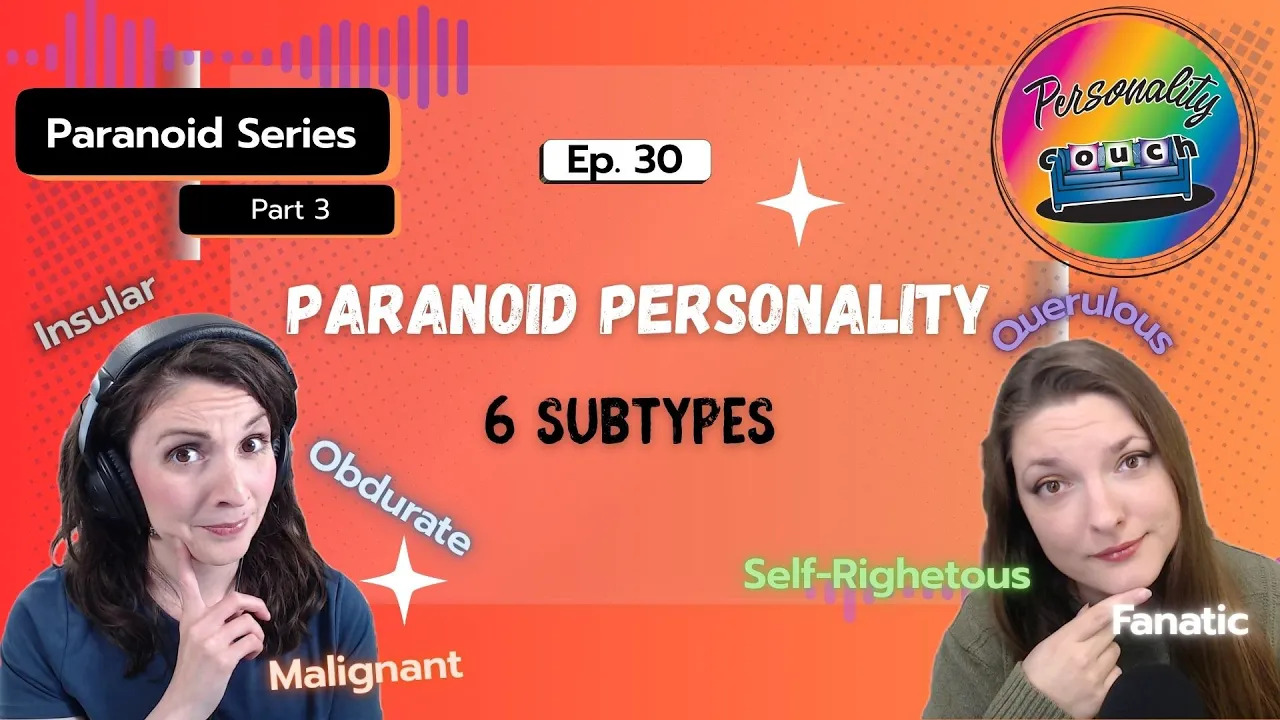
Ep 30: Paranoid Personality | The 6 Subtypes Explained
In this episode of The Personality Couch Podcast, we (licensed clinical psychologists Doc Bok and Doc Fish) continue our discussion about paranoid personality disorder, exploring its three severity levels: Mild, Borderline, and Paraphrenic. We unpack the six subtypes of paranoid personalities as outlined by Dr. Theodore Millon: The Self-Righteous Mistrustful, The Obdurate Mistrustful, the Querulous Paranoid, the Insular Paranoid, the severe Fanatic Paraphrenic, and Malignant Paraphrenic. We highlight the fragility of Paranoids at all levels of severity, noting they can easily deteriorate with stressors and setbacks. We emphasize the importance of understanding these very common personality dynamics in all settings, especially with increasing paranoia in the post-pandemic world.
Doc Bok
Doc Fish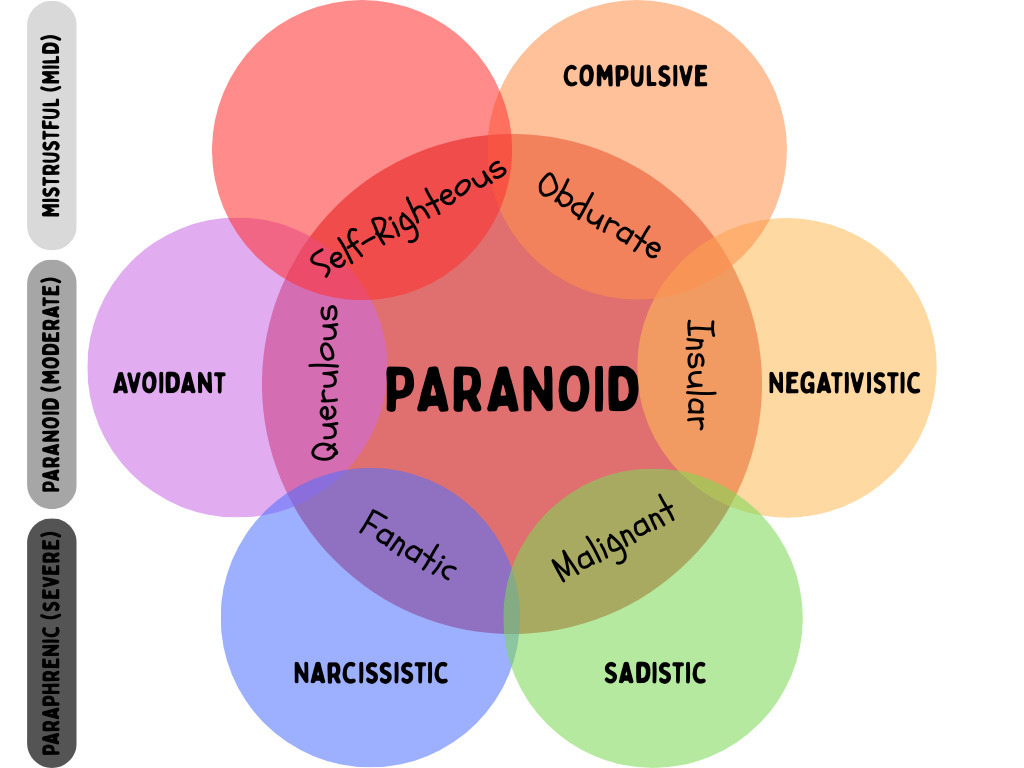
Paranoid Personality Subtypes
Despite how ridiculously underresearched paranoid personality disorder is, we still have some literature on its different flavors and presentations. The more severe, the more dangerous…take a peek at the subtypes of paranoid personality disorder!
Doc Fish
Ep 26: Malignant Narcissists in Politics | Their Rise and Fall to Power
In this episode of The Personality Couch Podcast, we (licensed clinical psychologists Doc Bok and Doc Fish) unpack the dangerous dynamics of malignant narcissism in political leadership. We first explore how these leaders rise to power, the psychological factors that enable their ascent, and the societal conditions that make populations susceptible to their charm. We introduce the narcoticizing and honeymoon phases of their reign where the malignant charmer woos their adoring audience. We then explore the characteristics that define malignant narcissist leaders, including how they navigate crises, the corruptibility of their conscience, and their devolution into psychotic thought processes. Further expounding on the dangers of their paranoia and their need for enemies, we share how no one escapes unscathed from these types in leadership. Our discussion concludes with reflections about the aftermath of the malignant narcissist’s reign, and the recovery and healing process from the trauma they inflict.
Doc Bok
Doc Fish
How Malignant Narcissists Rise to Power
Does the 90s research about malignant narcissists in power still hold true today? You may find that there’s nothing new under the sun! In this blog, we reveal the dangerous life cycle of narcissists in power and why we keep falling for their charm. Together, let’s explore the rise, reign, and unraveling of malignant narcissistic leaders—how they gain power during national crises, manipulate followers through illusion and ego, and ultimately leave chaos in their wake.
Doc Fish
Ep 25: The Malignant Narcissist's Mind | The Stairway to Evil
In this episode of The Personality Couch Podcast, we (licensed clinical psychologists Doc Bok and Doc Fish) delve into the complex and dark characteristics of malignant narcissism, exploring its origins, characteristics, and using examples from popular culture, particularly the film ‘American Psycho’. Citing Eric Fromm’s original work on defining evil, we discuss his triad of: necrophilious orientation, incestuous symbiosis, and malignant narcissism. Using connections to historical figures and Alfred Hitchcock’s ‘Psycho,’ we briefly explore what this triad looks like. After drawing on research across the decades to define characteristics of malignant narcissism, we further discuss the spectrum of antisocial behavior, aggression, sadism, and paranoia prominent in these types. While discussing how malignant narcissists operate in personal relationships and positions of power, we end by exploring the overlap of malignant narcissism and psychopathy.
Doc Bok
Doc Fish
The Malignant Narcissist
Interacting with a narcissist is not a pleasant experience, but are there “worse” narcissists than others? It seems so… There’s a pretty dangerous form of narcissism that takes us down a dark path of personality.
Doc Fish
Ep 24: The Communal Narcissist's Altruistic Illusion
In this episode of The Personality Couch Podcast, we (licensed clinical psychologists Doc Bok and Doc Fish) unpack the tricky topic of communal narcissism, exploring its characteristics, behaviors, and the environments in which these individuals thrive. We discuss the distinction between agentic and communal traits, the illusion of selflessness, and how communal narcissists often deceive themselves and others. We further highlight the presence of communal narcissism in charities, social media, and religious organizations. By examining the darker aspects of this personality type, we discuss insights about collective narcissism and the potential for harmful group dynamics. The episode concludes with insights on recognizing communal narcissism in relationships and its correlation with wealth and power.
Doc Bok
Doc Fish
A Helpful, 'Saintly' Narcissist?! - Unpacking Communal Narcissism
Narcissists are self-focused, exploitative, entitled, and basically the opposite of helpful…right? Well, actually there’s some newer research that discovered a different kind of narcissism that could be hidden right in your community…
Doc Fish