Obsessive Compulsive Personality (OCPD)
DSM: 301.4 ICD: F60.5OCPD in one of the few personality disorders that has a straightforward history. It overlaps a lot of conditions and is the most common personality disorder! In this series, we take a critical look at the DSM, psychodynamic theory, subtypes, differential diagnosis, and more!

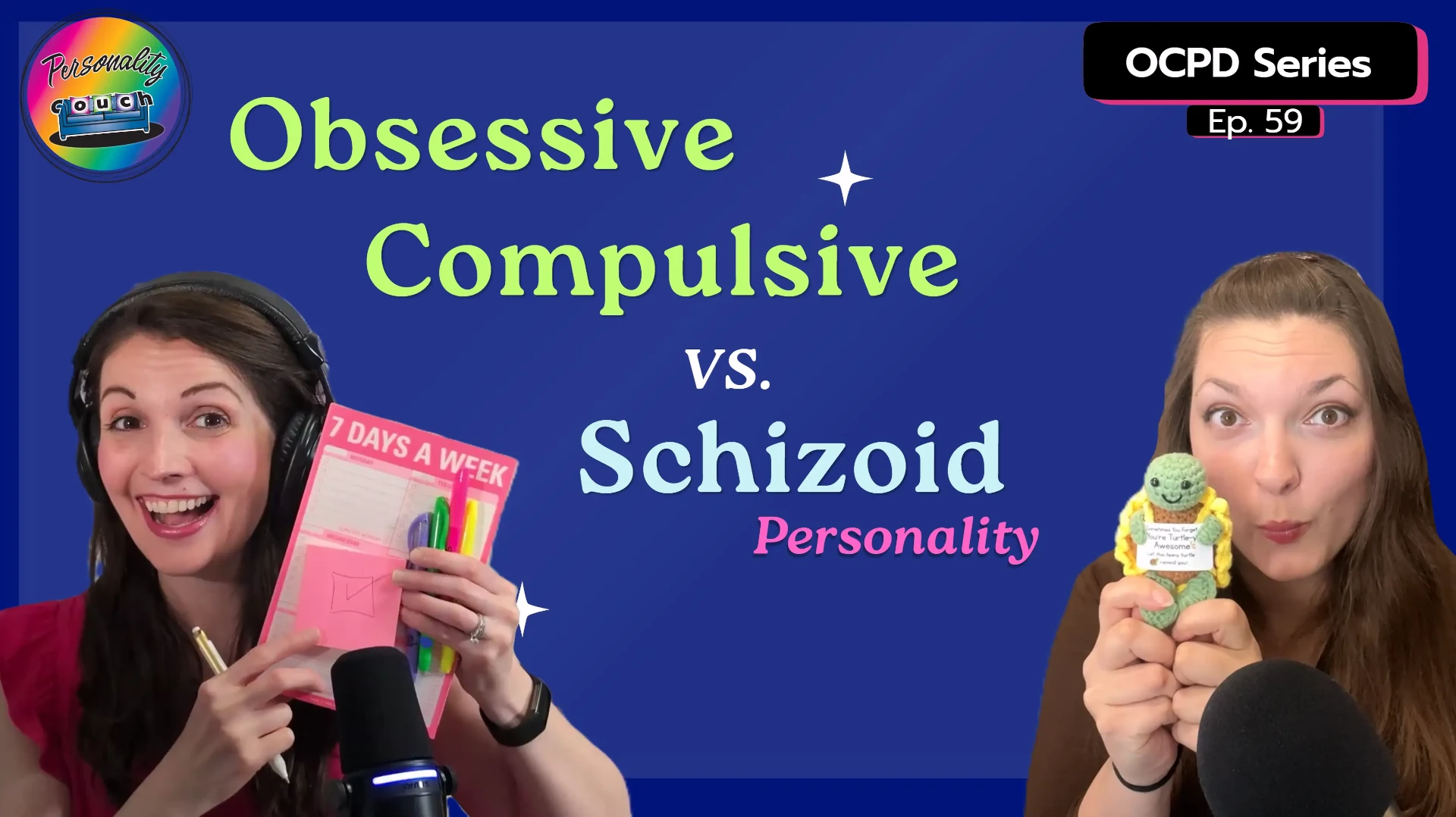
Ep 59: OCPD vs Schizoid Personality
🎬In this episode of the Personality Couch Podcast, we (licensed clinical psychologists Doc Bok and Doc Fish) unpack the nuanced differences and overlaps between obsessive-compulsive personality disorder (OCPD) and schizoid personality disorder(SzPD). We investigate each personality’s core drives, emotional experiences, and defense mechanisms, using a psychodynamic lens to capture these very different (yet similar) personalities.
 Doc Bok
 Doc Fish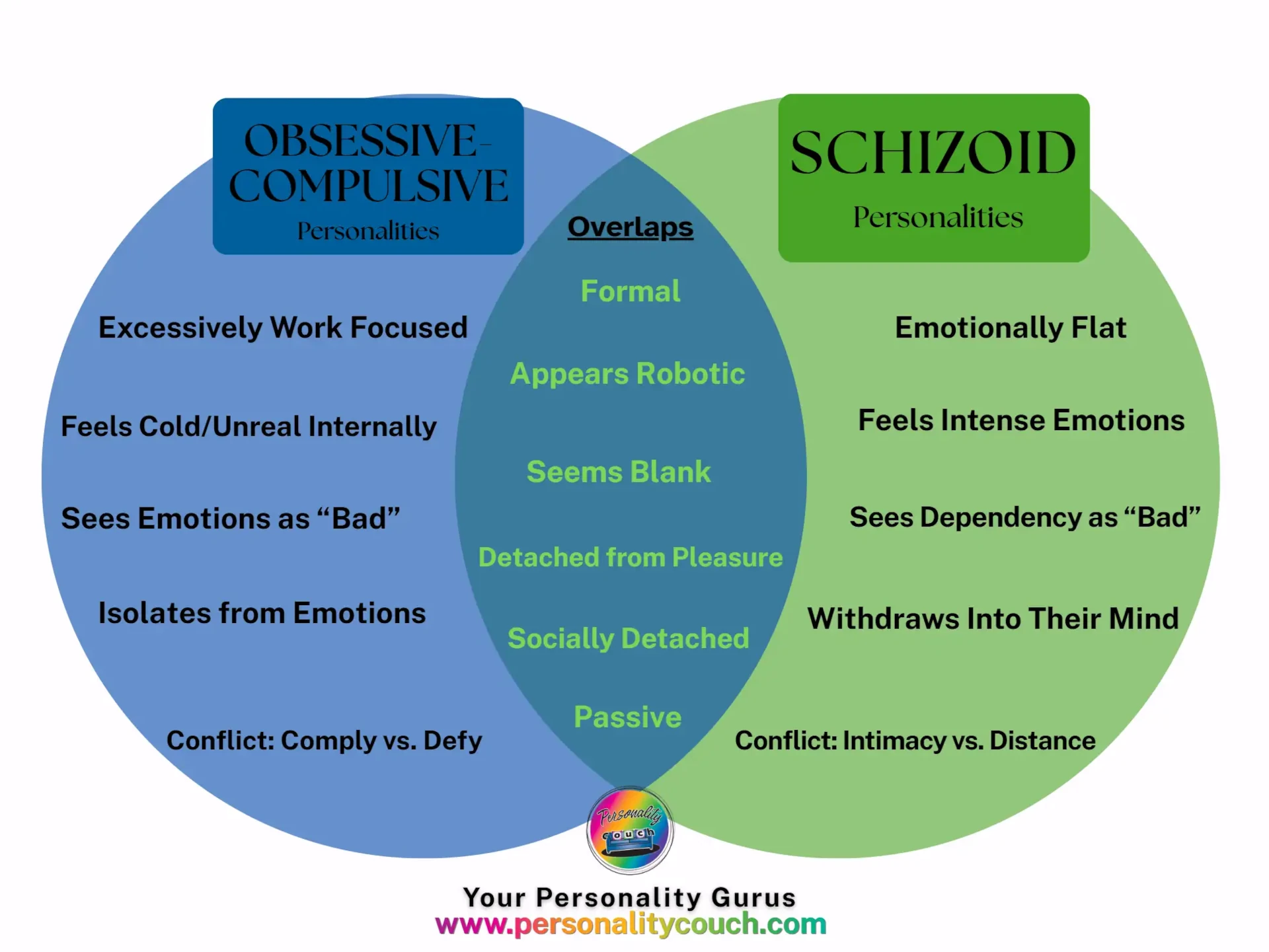
Obsessive-Compulsive vs. Schizoid: What’s the Difference?
Have you ever seen a “wooden” or “robotic” personality…or maybe you recognize it in yourself when you look in the mirror? There are a couple personalities that may embody this persona, and they are surprisingly similar on the outside. But the inside is vastly different! Join me as I discuss overlaps between obsessive-compulsive personality and schizoid personality!
Doc Fish
Ep 58: OCPD: The Six Subtypes
In this episode of the Personality Couch Podcast, we unpack the 6 subtypes of OCPD according to Dr. Theodore Millon. At the mild level, we explore the Conscientiously Reliable (Dependent Features) and the Perfectionistically Reliable, while at the Moderate level, we look at Bureaucratically Constricted (Narcissistic Features) and the Parsimoniously Constricted (Schizoid, Avoidant Features).
Doc Bok
Doc Fish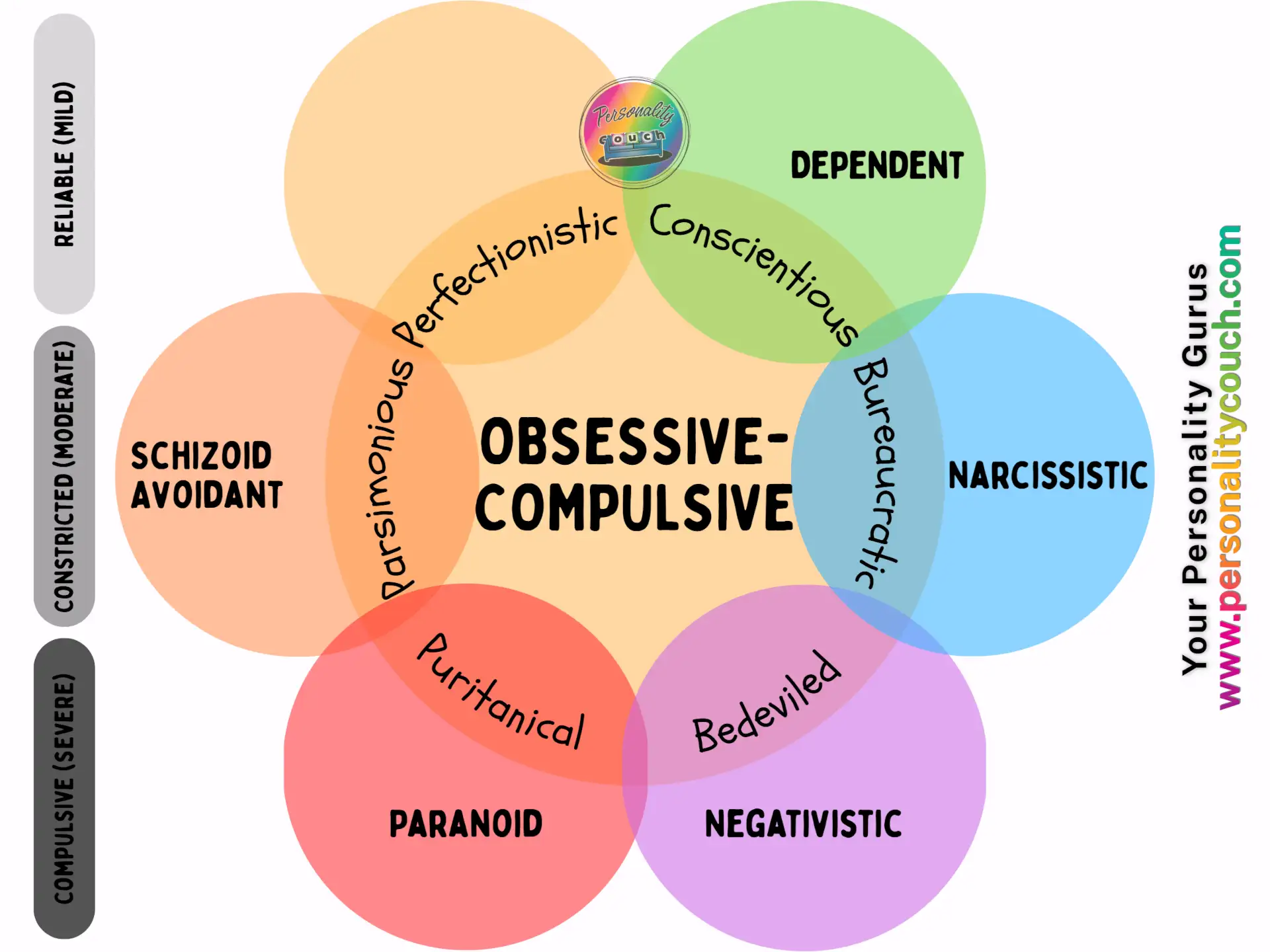
Compulsive Personality Subtypes (Millon)
Join me, as I dive into Millon’s 6 compulsive personality subtypes - a common personality that is perfectionistic, constricted, and rigid…with a hidden conflict involving resentment and aggressive urges!
Doc Fish
Ep 57: OCPD: Secrets Inside the Psyche
In this episode of the Personality Couch Podcast, we (licensed clinical psychologists Doc Bok and Doc Fish) explore the inner conflict in those with OCPD: to comply or to defy. We look at defense mechanisms and early attachment (and even potty training!) that drives their fixated behavior.
Doc Bok
Doc Fish
Obsessive-Compulsive Personality Disorder - Outside the DSM
Once again, the DSM doesn’t look deep inside the person in describing Obsessive-Compulsive Personality Disorder. Join me as I take a look at what other theorists have to say about the internal workings of those with Obsessive-Compulsive Personalities.
Doc Fish
Ep 56: Obsessive Compulsive Personality Disorder DSM Symptoms
In this episode of the Personality Couch Podcast, we explore the straightforward history of this condition, looking at fun names in history like anankastic and ambitendency. We also unpack the evolution of OCPD in the DSM, highlighting how our own compulsivity shows up in the naming and renaming of the disorder throughout history. We look in detail at the 8 criteria in the DSM and share our thoughts and criticisms about the DSM’s portrayal of this condition.
Doc Bok
Doc Fish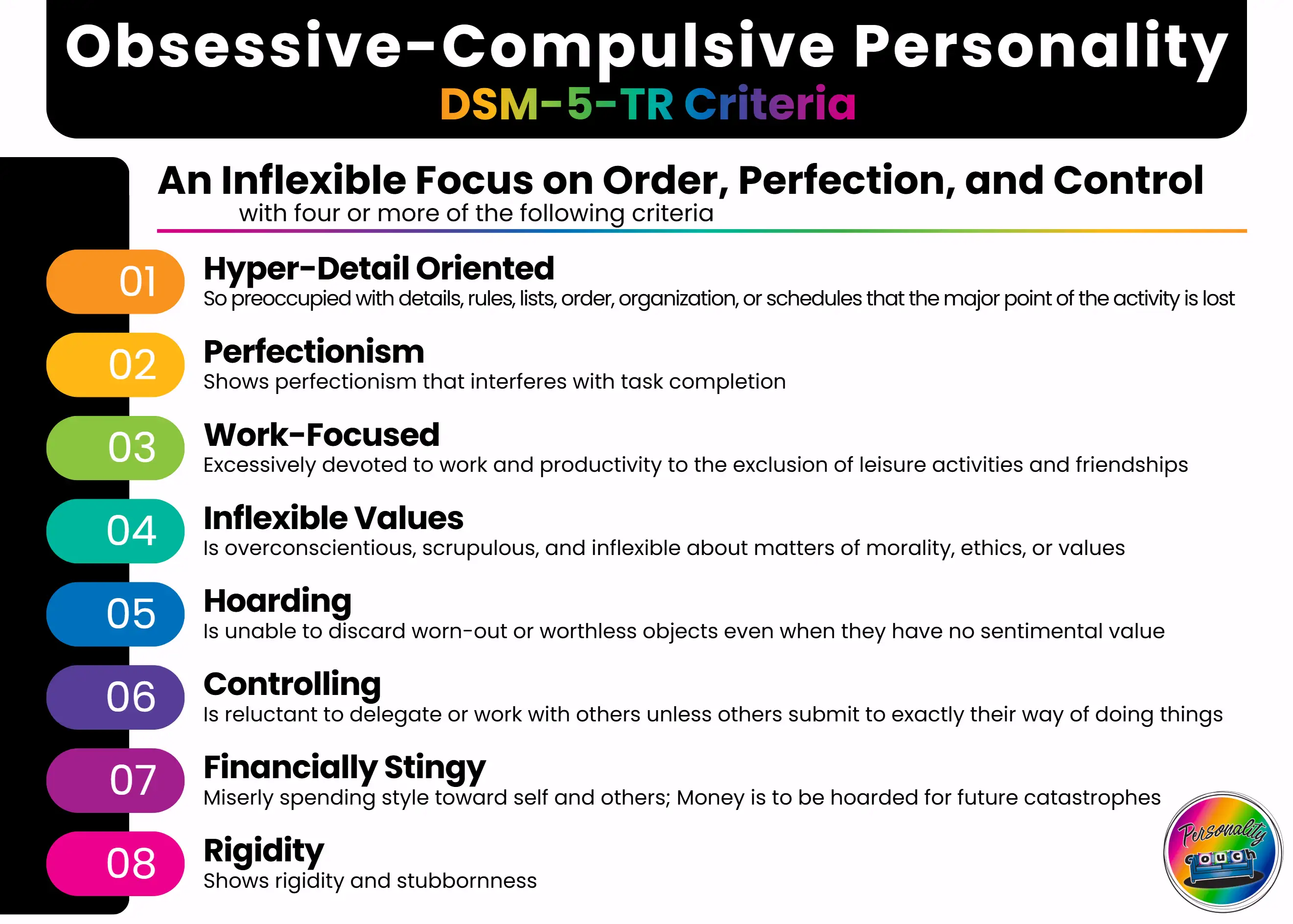
Obsessive-Compulsive Personality Disorder (F60.5) Diagnostic Criteria
One of the most common personality disorders, obsessive-compulsive personality disorder is wrought with order and perfectionism…Those seem to be positive qualities, so what makes it pathological? Join me, as I explore the DSM-5-TR criteria for obsessive-compulsive personality disorder!
Doc Fish
Ep 07: Personalities That Kill
In this episode of the Personality Couch Podcast, we discuss personality darkness and specifically focus on personalities that are prone to violence and extreme behavior. We also discuss two important research studies, the Milgram study and the Stanford prison experiment, that shed light on the capacity for humans to engage in harmful acts. We then delve into the different personality types within Cluster A (schizoid, schizotypal, and paranoid); Cluster B (borderline, histrionic, and narcissistic); and Cluster C (avoidant, dependent, obsessive-compulsive) and discuss their risk levels for violence and murder. In this conversation, we also explore sadistic personalities, a category not included in the DSM, but included in multiple other personality theories. We highlight the characteristics and behaviors associated with each type and discuss the potential for violence and destructive behavior. The conversation emphasizes the importance of understanding these personalities and their potential risks in order to promote awareness and better understanding of human behavior.
Doc Bok
Doc Fish
Personalities That Kill
Harm to others surrounds us in a ridiculous amount of ways. The popularity of true crime, dark genres, horror media, etc., provides evidence that people are interested in this topic. And of course, there’s always some recent event that can remind us of the darkness people have in them. There is SO much I could say about this topic, but for now: What personalities are at the most risk to kill?
Doc Fish