Borderline Personality (BPD)
DSM-5-TR: 301.83 ICD-10: F60.3In this series, we uncover the much-debated and tumultuous naming of borderline and share our unfiltered thoughts about the stigmatization of this condition. We explore the misrepresentation of BPD in the media and discuss how this only perpetuates trauma and rejection dynamics inherent in this disorder. We also look at DSM criteria, treatment options, and the ever-popular “quiet borderline” name.

Ep 65: Histrionic vs Borderline Personality: Our Deep Dive
🎬In this episode of the Personality Couch Podcast, we (licensed clinical psychologists Doc Bok and Doc Fish) explore the confusing and speckled history distinguishing histrionic and borderline personality disorders, clarifying their differences and overlaps. We delve into DSM criteria, psychodynamic, and Millon’s perspectives to untangle these often confused diagnoses.
 Doc Bok
 Doc Fish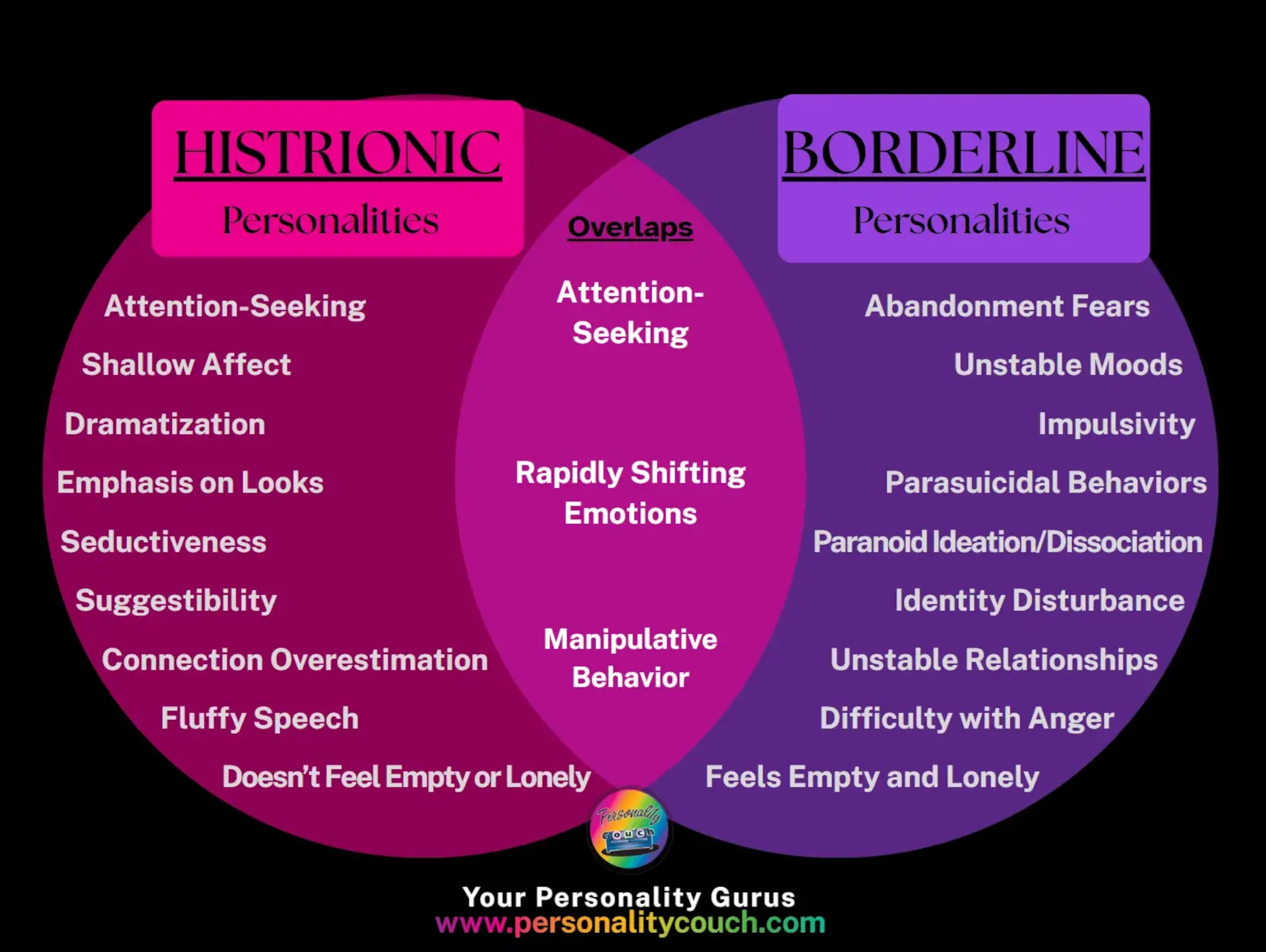
Histrionic vs. Borderline
Per usual, there is confusion amid the understanding of histrionic and borderline personality disorders. They both share traits like attention-seeking and shifting emotions, but they are also different…or are they? 🤔 Let’s explore the similarities and differences between histrionic and borderline!
Doc Fish
Ep 44: The 3 Most Unstable Personalities | Schizotypal, Borderline, & Paranoid
In this episode of the Personality Couch Podcast, we (licensed clinical psychologists Doc Bok and Doc Fish) explore the 3 most unstable personality disorders: schizotypal, borderline, and paranoid. All 3 types are at risk of psychosis. We first discuss historical personality classifications of neurotic, psychotic, and borderline, highlighting that the borderline space between neurotic and psychotic is the most prone to instability. This borderline space is where schizotypal, borderline, and paranoid personalities sit. We discuss the risky traits of each personality, including cognitive slippage, emotional instability, and extreme rigidity. We also discuss some of our thoughts and experiences in diagnosing these rather tricky disorders!
Doc Bok
Doc Fish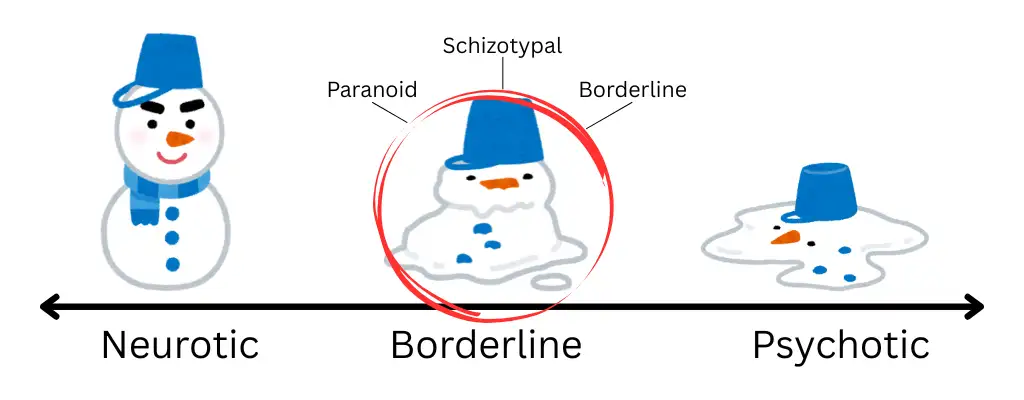
The 3 Unstable Personalities
At the borderline level of organization, there are some personalities that are falling apart: Schizotypal, Borderline, and Paranoid. Millon calls them “structurally defective”…but what does that even mean? Here I take a look at these melting personalities.
Doc Fish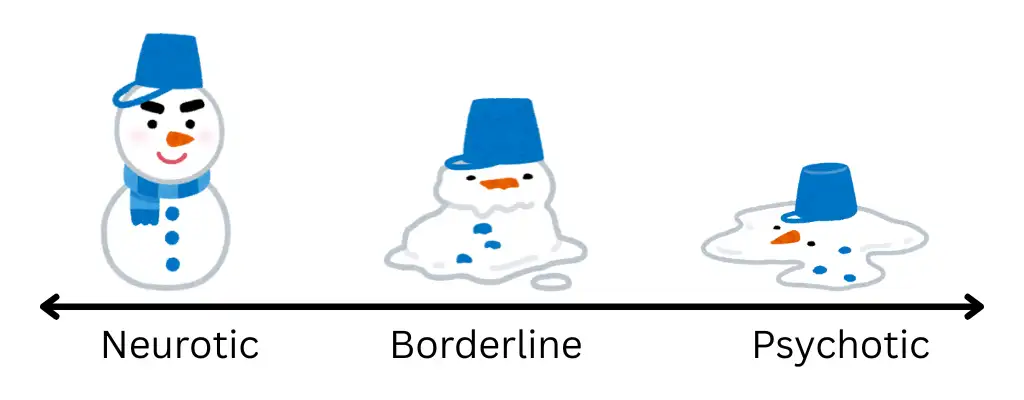
Understanding Neurotic, Borderline, and Psychotic Personalities
Historically, we used to have two categories for psychological patients to fall in: neurotic or psychotic. But that wasn’t enough (surprise!) because there were individuals who didn’t fall into either category. Alas, the borderline state of being was coined! Learn more about these three categories of personality functioning.
Doc Fish
Ep 29: Paranoid Personality or BPD? | The Unstable Duo
In this episode of The Personality Couch Podcast, we (licensed clinical psychologists Doc Bok and Doc Fish) help differentiate between paranoid and borderline personality disorders. We explore the similarities and differences between these two disorders, discussing their core characteristics, emotional responses, symptoms, and how our own intuition helps us more than we realize. We specifically look at the instability unique to these two personality disorders and how both express anger, shame, and fear. As both disorders can have fleeting episodes of psychosis, we also discuss how delusions can show up in each, but how their triggers are vastly different. We further discuss our own personal experiences treating both disorders and ways we use our intuition to guide diagnosis. We end by highlighting the need for empathy in treatment and welcome other providers to reference this information or to contact us directly if in need of a consultation.
Doc Bok
Doc Fish
Paranoid Personality or Borderline Personality? | The Unstable Duo
Paranoid personalities and borderline personalities can be difficult to distinguish because of many overlaps. Can it be done? In this blog, we parse out the differences between these two unstable personalities.
Doc Fish
Ep 17: Quiet Borderline | A Closer Look at BPD Subtypes
In this episode of the Personality Couch Podcast, we continue to explore the complexities of Borderline Personality Disorder (BPD), particularly focusing on the lesser-known subtype: Quiet BPD. We delve into the historical origins of the term ‘borderline,’ discuss the various subtypes of BPD, and highlight the differences between Quiet and Noisy BPD. The conversation also touches on the lack of recent empirical research on Quiet BPD and the cultural emergence of the term. We further emphasize the importance of understanding the internal versus external presentations of BPD symptoms and the implications for treatment. The discussion emphasizes the importance of recognizing the different types of BPD and the need for nuanced understanding in both clinical practice and societal perceptions.
Doc Bok
Doc Fish
Quiet Borderline: A Closer Look at Subtypes
Does Quiet BPD exist? If so, what are other subtypes of borderline personality disorder? Read more for a closer look at the numerous ways borderline personality disorder symptoms can show up!
Doc Fish
Ep 16: BPD Part 4: What Therapy Really Looks Like
In this episode of the Personality Couch Podcast, we dive into the complexities of Borderline Personality Disorder (BPD) treatment, in particular, the healing power of the invisible dynamics in therapy. We discuss the importance of motivation and insight in recovery for BPD, and the significance of the therapeutic relationship. The conversation emphasizes that while BPD is treatable, the journey is often non-linear and requires active participation from the patient. We also highlight the necessity of setting boundaries within therapy to create a safe and effective environment for healing. In this conversation, we discuss the importance of evaluating effort in therapy, the significance of attachment, and the challenges posed by boundary violations. Our conversation also explores the concepts of transference and counter-transference, the process of repairing ruptures in the therapeutic relationship, and the methods of facilitating insight and connections in therapy. Overall, this discussion emphasizes the individualized nature of treatment and the invisible dynamics that play a crucial role in the therapeutic process.
Doc Bok
Doc Fish