Tag: Personality Couch Podcast
Showing all content tagged with #Personality Couch Podcast
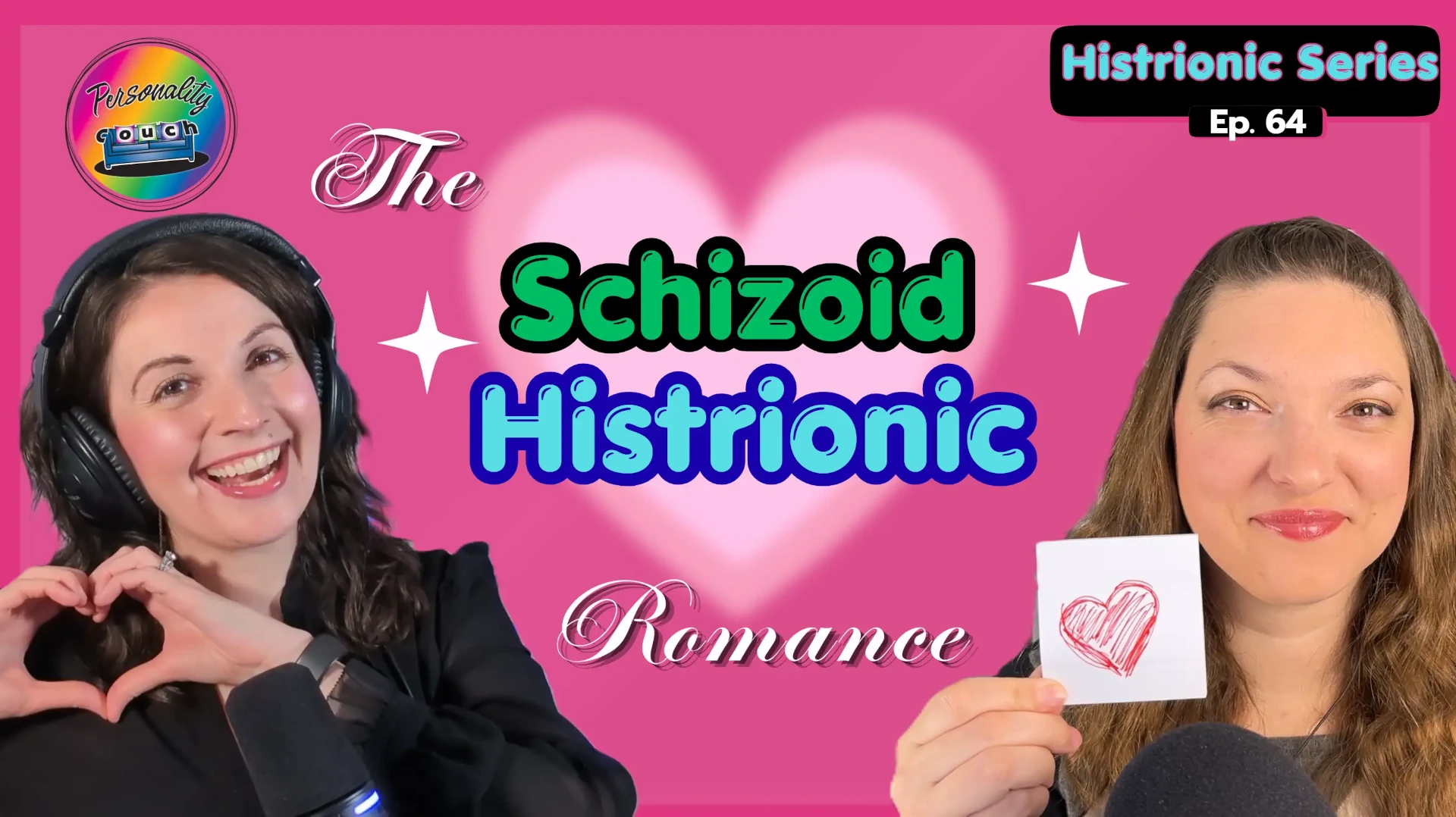
Ep 64: The Schizoid Histrionic Romance
🎬In this episode of the Personality Couch Podcast, we (licensed clinical psychologists Doc Bok and Doc Fish) explore the intriguing dynamics between schizoid and histrionic personalities, focusing on their attraction, shared trauma, familial gender dynamics, and hypersensitivity. We explore how these opposites attract romantically, and how at healthy levels, they can meet each other’s unspoken needs.
 Doc Bok
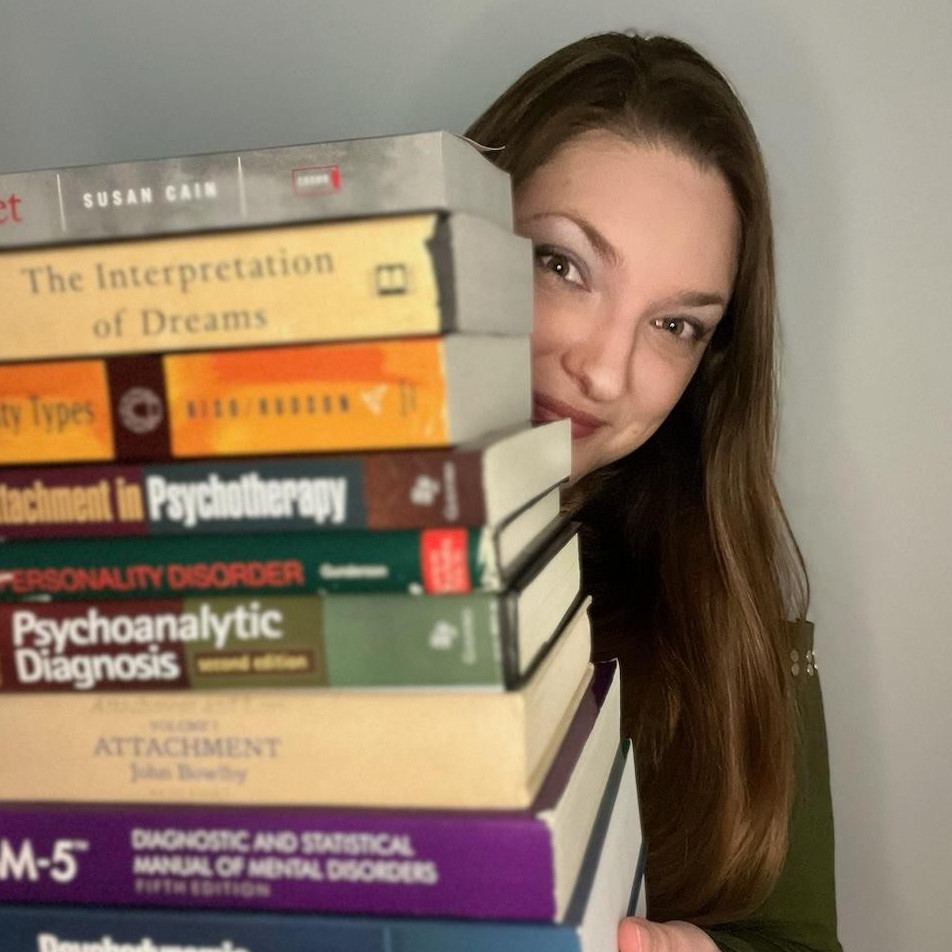 Doc Fish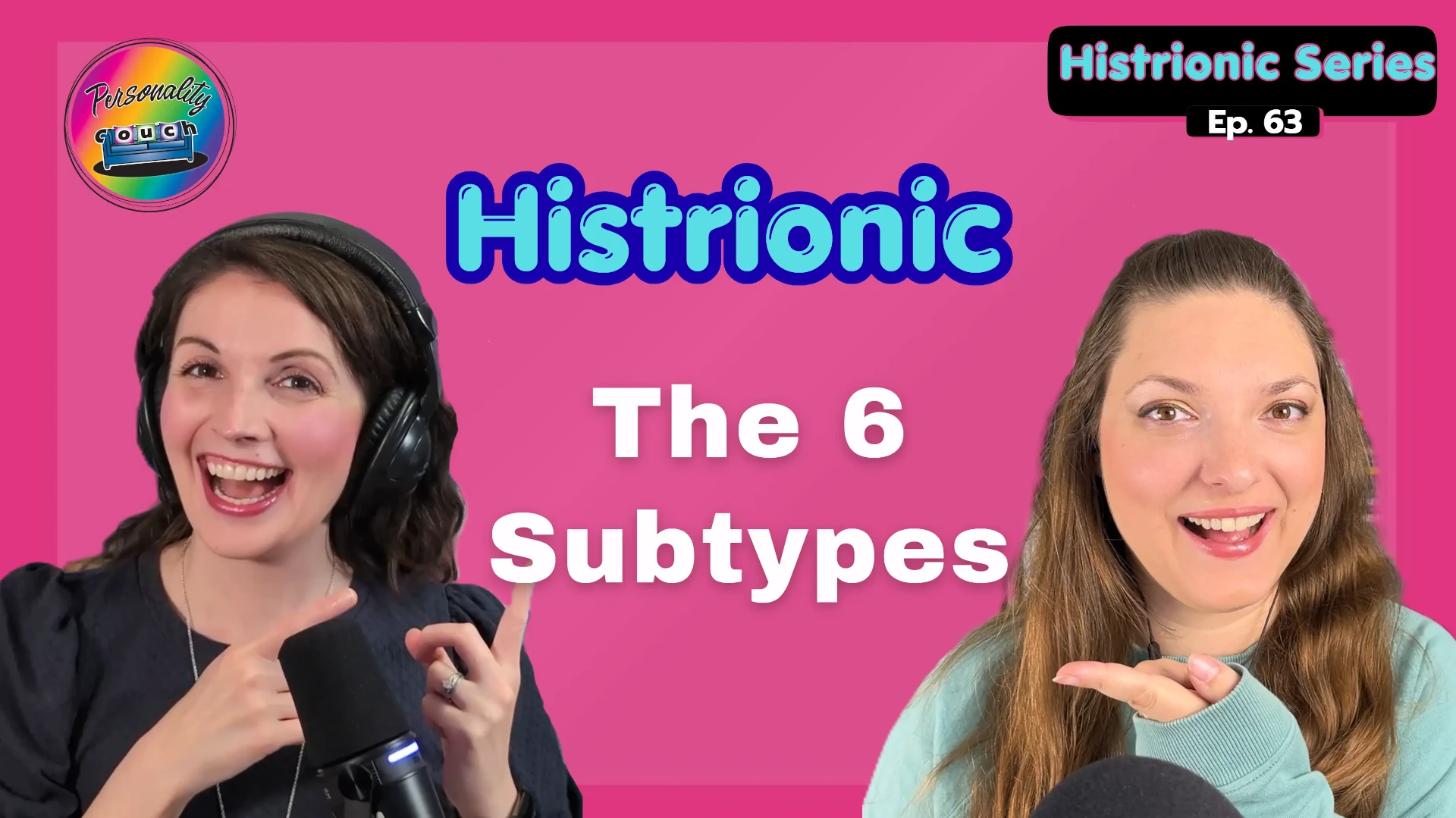
Ep 63: The 6 Histrionic Subtypes Explained
🎬In this episode of the Personality Couch Podcast, we (licensed clinical psychologists Doc Bok and Doc Fish) explore the 6 subtypes of histrionic personality, highlighting their behaviors, underlying motivations, and how they manifest in social and personal contexts. We start by investigating the mild category: the gregariously sociable with narcissistic features, and the appeasingly sociable with dependent and compulsive features. At the moderate level, we discuss the theatrically pleasuring subtype with masochistic features and the infantile pleasuring subtype with borderline features. We end by comparing and contrasting the two disorder level subtypes: the disingenuous histrionic with antisocial features and the tempestuous histrionic with negativistic and borderline features.
Doc Bok
Doc Fish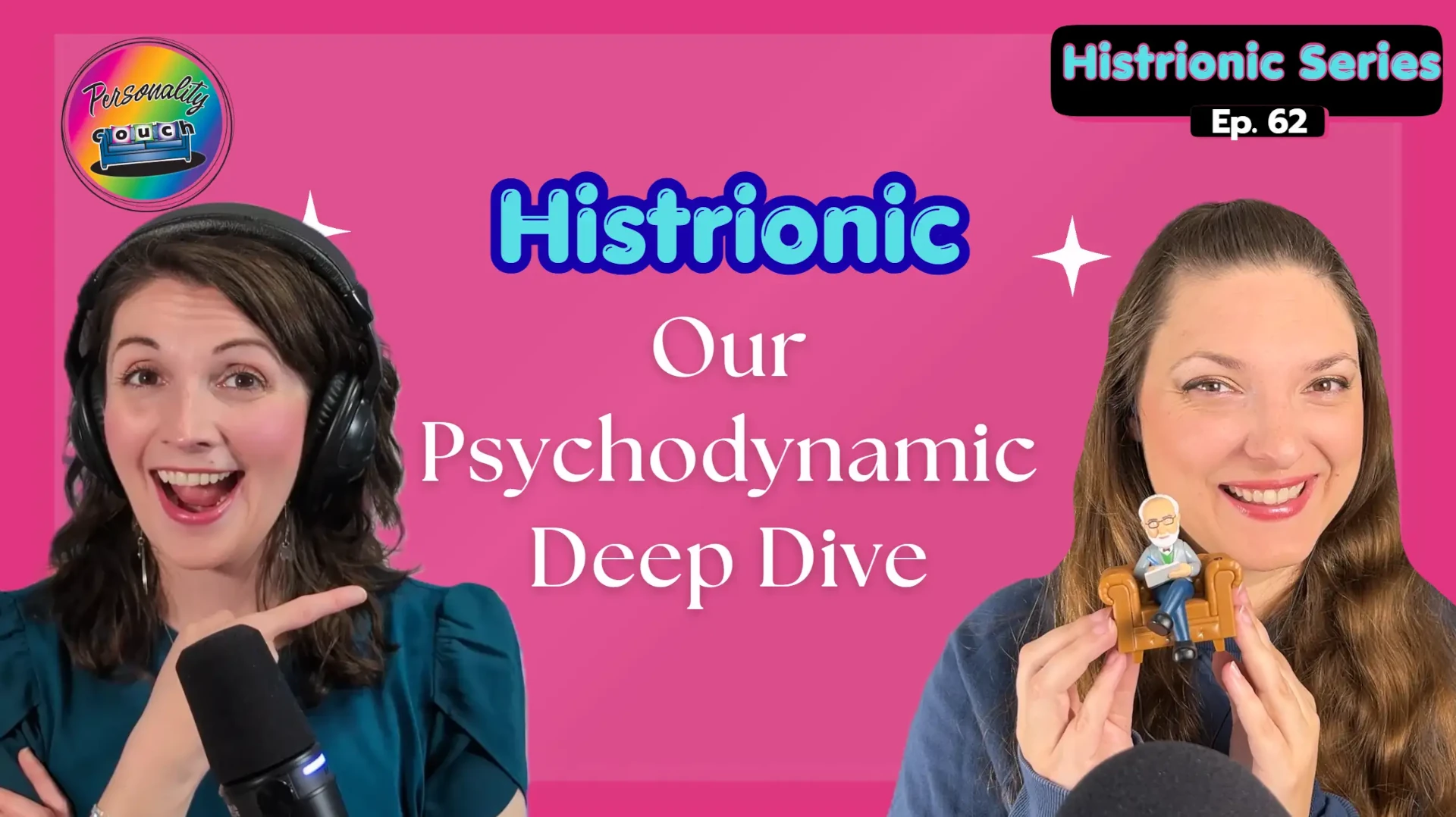
Ep 62: Histrionic Personality | Our Psychodynamic Deep Dive
🎬In this episode of the Personality Couch Podcast, we (licensed clinical psychologists Doc Bok and Doc Fish) explore the complex psychological and societal factors contributing to histrionic personality disorder, focusing on gender dynamics, childhood development, and cultural influences. We specifically explore the histrionic’s fear of overstimulation internally; how they seek out professions that have a stage; and how they view the self and their own gender as defective. We look at their defense mechanisms in depth, including: repression, conversion, sexualization, acting out, regression, and dissociation. We end the episode by positing the new wave of gender and sexual fluidity and non-conformity may be a new expression of the histrionic character.
Doc Bok
Doc Fish
Ep 61: Histrionic Personality Disorder | The 8 DSM Criteria
🎬In this episode of the Personality Couch Podcast, we (licensed clinical psychologists Doc Bok and Doc Fish) explore the 8 criteria of histrionic personality disorder in the DSM. We discuss their tendency to engage in attention-seeking and seductive behaviors, coming across as emotionally shallow. Histrionic personalities also focus heavily on their appearance and use fluffy, impressionistic speech. Others perceive them as dramatic and suggestible - easily believing what others say regardless of the facts. They also tend to overestimate their connections to others, believing relationships are deeper than they actually are.
Doc Bok
Doc Fish
Ep 60: Hysteria, Histrionic, & the Demonization of Women
🎬In this episode of the Personality Couch Podcast, we (licensed clinical psychologists Doc Bok and Doc Fish) discuss the horrible and inhumane history of hysteria in medicine by investigating how Dr. Jean Martin Charcot used the Salpetriere Hospital in France as a “Museum of Living Pathology” to showcase his hypnotic and showman skills over hysterical women. We look at Freud’s contribution to hysteria and the oppressive, patriarchal society of the 1880s that led to these unexplained symptoms in women. We continue the discussion by walking through the DSM’s hysteria to histrionic personality evolution before sharing our own thoughts and opinions about this condition’s stigmatized name and the maltreatment of women in medicine throughout history.
Doc Bok
Doc Fish
Ep 59: OCPD vs Schizoid Personality
🎬In this episode of the Personality Couch Podcast, we (licensed clinical psychologists Doc Bok and Doc Fish) unpack the nuanced differences and overlaps between obsessive-compulsive personality disorder (OCPD) and schizoid personality disorder(SzPD). We investigate each personality’s core drives, emotional experiences, and defense mechanisms, using a psychodynamic lens to capture these very different (yet similar) personalities.
Doc Bok
Doc Fish
Ep 58: OCPD: The Six Subtypes
In this episode of the Personality Couch Podcast, we unpack the 6 subtypes of OCPD according to Dr. Theodore Millon. At the mild level, we explore the Conscientiously Reliable (Dependent Features) and the Perfectionistically Reliable, while at the Moderate level, we look at Bureaucratically Constricted (Narcissistic Features) and the Parsimoniously Constricted (Schizoid, Avoidant Features).
Doc Bok
Doc Fish
Ep 57: OCPD: Secrets Inside the Psyche
In this episode of the Personality Couch Podcast, we (licensed clinical psychologists Doc Bok and Doc Fish) explore the inner conflict in those with OCPD: to comply or to defy. We look at defense mechanisms and early attachment (and even potty training!) that drives their fixated behavior.
Doc Bok
Doc Fish
Ep 56: Obsessive Compulsive Personality Disorder DSM Symptoms
In this episode of the Personality Couch Podcast, we explore the straightforward history of this condition, looking at fun names in history like anankastic and ambitendency. We also unpack the evolution of OCPD in the DSM, highlighting how our own compulsivity shows up in the naming and renaming of the disorder throughout history. We look in detail at the 8 criteria in the DSM and share our thoughts and criticisms about the DSM’s portrayal of this condition.
Doc Bok
Doc Fish
Ep 55: The Dark Schizoid
In this episode of the Personality Couch Podcast, we (licensed clinical psychologists Doc Bok and Doc Fish) explore the distinctions between antisocial personality and narcissistic personality by analyzing DSM diagnoses, Stones’ Spectrum of Dark Personalities, and subtypes from Dr. Theodore Millon like: Reputation-Defending Devious, Exploitative Egotist, and the Unprincipled Narcissist.
Doc Bok
Doc Fish