Histrionic Personality Disorder (F60.4) Diagnostic Criteria


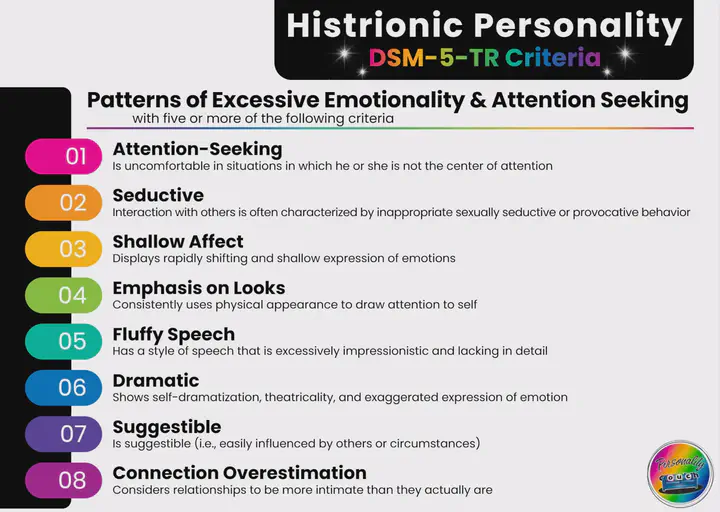
Despite its horrible history (see “The Horrific History of Histrionic Personality Disorder” blog), histrionic personality disorder was not included in the first edition of the DSM-I1 in 1952 (it showed up in a different form*). It was first added in the DSM-II2 in 1968 and was significantly expanded in the DSM-III3 and DSM-III-R4 in the 1980s. Since 1994 in the DSM-IV5, there have been no major changes in the DSM regarding histrionic personality disorder. So let’s talk about the current criteria for histrionic personality disorder in the DSM-5-TR6.
*The first edition of the DSM-I included hysteria and hysterical neuroses, but not hysterical personality dynamics. Check out the history of hysteria blog for more information.
| Note: Text in these boxes are the exact words from DSM-5-TR6 |
|---|
Histrionic Personality Disorder Criteria
| “A pervasive pattern of excessive emotionality and attention seeking, beginning by early adulthood and present in a variety of contexts, as indicated by five (or more) of the following6:” (p. 758) |
|---|
With all personality disorders, there is a framework where there needs to be lifelong patterns intertwined with who the person is. It doesn’t just show up one day; it is there by at least early adulthood and spans many settings, like work, school, home, etc. So for histrionic personality disorder, the main patterns are excessive emotionality and attention seeking. Then, there needs to be five out of the following eight criteria.
Attention-Seeking: Histrionic Personality Disorder (Criterion 1)
| “Is uncomfortable in situations in which he or she is not the center of attention6.” (p. 758) |
|---|
When not the center of attention, they feel unappreciated and/or uncomfortable, so they work hard to gain and maintain attention. They can be the life of the party, dramatic, enthusiastic, flirtatious, and seemingly open, which can definitely charm new social acquaintances. However, others can have negative reactions to those with histrionic personality disorder, as they continue to demand attention and promote dramatic reactions to gain attention like making up stories or creating a scene. They can alienate friends due to their attentional demands, and they can become upset and depressed without the attention they seek. Often, there is attention-seeking behavior within the therapy setting with the provider as well. For example, they may be very flattering, give gifts, or describe dramatic symptoms that change each session.

Seductive: Histrionic Personality Disorder (Criterion 2)
| “Interaction with others is often characterized by inappropriate sexually seductive or provocative behavior6.” (p. 758) |
|---|
This is not just aimed at one person. It’s not like they have a work crush and behave seductively and inappropriately only in regard to their one romantic interest. It’s a wide range of settings and relationships. It’s in social settings, work settings, professional relationships, etc. They actually can struggle with having healthy same-sex friendships because their manner of being seductive and provocative can seem threatening to their friends’ romantic relationships.
Shallow Affect: Histrionic Personality Disorder (Criterion 3)
| “Displays rapidly shifting and shallow expression of emotions6.” (p. 758) |
|---|
This one is tricky, and there’s not much description about it in the diagnostic features section of the DSM-5-TR, though it kind of goes along with criterion 6’s exaggerated emotions. This criterion captures the flighty jumps from emotion to emotion, which parallels other areas of life. Those with histrionic personality disorder yearn for excitement, stimulation, and shiny newness, being easily bored with normal routine and even normal, longer-term relationships. They can jump from partner to partner, chasing the excitement of new relationships. They want and pursue immediate gratification, having difficulty tolerating any delays. For example, they might be super excited and enthusiastic about starting a new job or progress, but it doesn’t last long before they pursue the next one. So, they express excitement, then boredom, then frustration, and then intrigue at a new shiny opportunity. The cycle of emotional expression can change quickly, inherently making the emotional expression seem shallow.

Emphasis on Appearance: Histrionic Personality Disorder (Criterion 4)
| “Consistently uses physical appearance to draw attention to self6.” (p. 758) |
|---|
This one often goes along with criterion 2, because it’s not just the behaviors that are used to get attention, but also their appearance. And again, it’s not just directed at one person or one situation; it’s a lifestyle. They can be super preoccupied with looking good and impressing others, excessively spending energy, money, and time on how they look. Think appointments, treatments, shopping trips, and excessive make up. In regard to their appearance, they can definitely “fish for compliments,” and if they receive criticism about their appearance or see a picture of themselves they think isn’t flattering, they can become easily upset.
Fluffy Speech: Histrionic Personality Disorder (Criterion 5)
| “Has a style of speech that is excessively impressionistic and lacking in detail6.” (p. 758) |
|---|
This criterion fits with criterion 3 (shallow expression of emotions). There’s a lack of depth here, as they make broad, dramatic, blanket statements and strong opinions, but can’t back it up with logic or details. Their rationales can be diffuse and vague. They might say, “Oh yes, yes, Susan! She’s such a wonderful person,” but they can’t come up with any specific details about Susan’s good qualities to support their opinion of her.

Dramatic: Histrionic Personality Disorder (Criterion 6)
| “Shows self-dramatization, theatricality, and exaggerated expression of emotion6.” (p. 758) |
|---|
There are inappropriately excessive emotional displays that can embarrass their friends in public. For example, a small sentimental event can result in uncontrollable sobbing, or they can be overly excited and inappropriate in hugging an acquaintance, or they might just have a temper tantrum. However, the DSM-5-TR states, “Their emotions often seem to be turned on and off too quickly to be deeply felt, which may lead others to accuse the individual of faking these feelings.” So, emotional expression is dramatic, theatrical, exaggerated, and labile, yet shallow. It should also be noted that the DSM-5-TR states, “The actual risk of suicide is not known, but clinical experience suggests that individuals with this disorder may be at increased risk for suicidal gestures and threats.”
Suggestible: Histrionic Personality Disorder (Criterion 7)
| “Is suggestible (i.e., easily influenced by others or circumstances)6.” (p. 758) |
|---|
Those with histrionic personality disorder want to impress others, and they easily adopt emotions and opinions that fit their external environment, including other people, society, and the newest trends. They can actually trust too easily, especially strong authority figures. They tend to believe their problems could be magically solved by someone who serves as a surrogate parent.

Connection Overestimation: Histrionic Personality Disorder (Criterion 8)
| “Considers relationships to be more intimate than they actually are6.” (p. 758) |
|---|
This is different from narcissistic rubbing elbows for image. They genuinely feel closer and attach easily to others. For example, they can view all their acquaintances as very dear friends, or call providers they met once or twice in professional settings by their first names.
It’s important to note that the DSM-5-TR states, “Impairment in general tends to be lower in histrionic personality disorder than in many other personality disorders. However, the impairment most associated with histrionic personality disorder appears to be interpersonal in nature.” This makes sense throughout the criteria we just talked about. They have a span of behaviors associated with social dominance. On the warmer end, so “warmer dominance,” they can be exhibitionistic, needing to be the center of attention, which is inherently intrusive in nature. On the colder end, so “colder dominance,” they can be arrogant, controlling, and aggressive in their behaviors. Histrionics can have trouble with emotional intimacy and have high impairment in romantic relationships, being more likely to not ever get married or to get divorced.6
If you want to better understand and care for a histrionic individual in your life, or if you are a histrionic personality and want to explore it, feel free to reach out! If you’re in Virginia (or a PsyPact state), check out our private practice, Quest Psychological and Counseling Services for available services. If you’re a provider stuck on a case, we also offer consultations for mental health professionals!
References
American Psychiatric Association. (1952). Diagnostic and statistical manual: Mental disorders (1st ed.). https://doi.org/10.1176/appi.books.9780890420331.dsm-i ↩︎
American Psychiatric Association. (1968). Diagnostic and statistical manual of mental disorders: DSM-II (2nd ed.). https://doi.org/10.1176/appi.books.9780890420355.dsm-ii ↩︎
American Psychiatric Association. (1980). Diagnostic and statistical manual of mental disorders: DSM-III (3rd ed.). https://doi.org/10.1176/appi.books.9780521315289.dsm-iii ↩︎
American Psychiatric Association. (1987). Diagnostic and statistical manual of mental disorders: DSM-III-R (3rd edition, revised.). https://doi.org/10.1176/appi.books.9780890420188.dsm-iii-r ↩︎
American Psychiatric Association. (1994). Diagnostic and statistical manual of mental disorders: DSM-IV (4th ed.). https://doi.org/10.1176/appi.books.9780890420614.dsm-iv ↩︎
American Psychiatric Association. (2022). Diagnostic and statistical manual of mental disorders: DSM-5-TR (5th edition, text revision.). https://doi.org/10.1176/appi.books.9780890425787 ↩︎ ↩︎ ↩︎ ↩︎ ↩︎ ↩︎ ↩︎ ↩︎ ↩︎ ↩︎ ↩︎ ↩︎
