

What are you looking for?
Instantly search across all podcast conversations, blogs, and personality deep-dives.
Explore DSM Personality Multiseries
Dependent Personality
Dependent Personality is characterized by a pervasive and excessive need to be taken care of, resulting in submissiveness and clinging behavior. Individuals with this disorder often fear separation and rely heavily on others for decision-making. In this series, we dive in to the brief history dependent personality before looking at the DSM criteria. We also give our psychoanalysis of the condition, discuss the 6 subtypes, and compare it to other diagnoses like Borderline Personality (BPD) and Histrionic Personality (HPD).
Histrionic Personality
Histrionic Personality has long been thought of as a female disorder…but it’s not! In this series, we dive into the horrific history of hysteria and histrionic before looking at the DSM criteria. We also give our psychoanalysis of the condition, discuss the 6 subtypes, and compare it to other diagnoses like Borderline Personality (BPD). We conclude the series by discussing how histrionic and schizoid are opposites that attract one another!
Obsessive Compulsive Personality
OCPD in one of the few personality disorders that has a straightforward history. It overlaps a lot of conditions and is the most common personality disorder! In this series, we take a critical look at the DSM, psychodynamic theory, subtypes, differential diagnosis, and more!

Antisocial Personality
In this series, we unpack this countercultural and sometimes criminal personality while taking a critical look at the DSM criteria as a “trash can diagnosis” for the misfits and misbehaved. We discuss subtypes and look at differential diagnoses between ASPD and Psychopathy and ASPD and Narcissism. We end the series by exploring the overlap between schizoid and antisocial in our “Dark Schizoid” episode.

Avoidant Personality
In this series, we use a critical lens to discuss this personality’s late origins in the 1960s and further discuss how sociopolitical culture influences personalities across generations. We look at the 6 subtypes according to Millon and also the unique attachment style with this personality. Looking at the DSM criteria, we also explore the nuanced differences between this personality and schizoid presentations.

Schizotypal Personality
In this series, we take a critical look at schizoid vs schizotypal personalities and unpack the research about genetic markers like schizotypy that put an individual at risk of schizophrenia. We look at DSM criteria; the 6 subtypes according to Millon; and explore the instability inherent in this condition, making it more prone to falling out of reality and into psychosis.

Schizoid Personality
Our most popular series by far, we discuss how the schizoid personality is often misunderstood and liken this type to a turtle, preferring to be alone vs in the social world. We explore psychodynamic theory and Nancy McWilliams’ conceptualization (which we find more complete than the DSM). We also contrast schizoid and autism; answer viewer questions; explore subtypes (and make our own!); and also contrast SzPD with avoidant personality.

Paranoid Personality
In this series, we explore the mysterious paranoid personality by discussing its increase in the post-pandemic landscape. We discuss the instability inherent in this type as well as the 6 subtypes according to Millon (self-righteous, obdurate, querulous, insular, fanatic paraphrenic, and malignant paraphrenic). We also contrast paraphrenia and schizophrenia diagnoses and end the series by discussing 3 true crime cases with paranoid components: Jeffrey Weise, Richard Farley, and Timothy McVeigh.

Narcissistic Personality
In this series, we unpack narcissism as a trait vs when it’s pathological; NPD in the DSM-5; and various presentations of narcissism, including: vulnerable, grandiose, communal, and malignant variations. We also address malignant narcissism in politics by exploring what it looks like when world leaders display these traits. We conclude the series by exploring “worse” conditions, including sadism and psychopathy in dark personalities.

Borderline Personality
In this series, we uncover the much-debated and tumultuous naming of borderline and share our unfiltered thoughts about the stigmatization of this condition. We explore the misrepresentation of BPD in the media and discuss how this only perpetuates trauma and rejection dynamics inherent in this disorder. We also look at DSM criteria, treatment options, and the ever-popular “quiet borderline” name.

Early Episodes
In our first episodes, we uncover our own journeys to becoming personality experts and explore myths and trends in clinical practice;we define personality; and we discuss how we spot personality disorders by understanding the drama triangle. We examine the various DSM, Millon, and psychodynamic personalities and have fun likening them to ice cream flavors! Going a bit darker, we also look at personalities that kill and ones that didn’t make it into the DSM.
Watch Recent Episodes
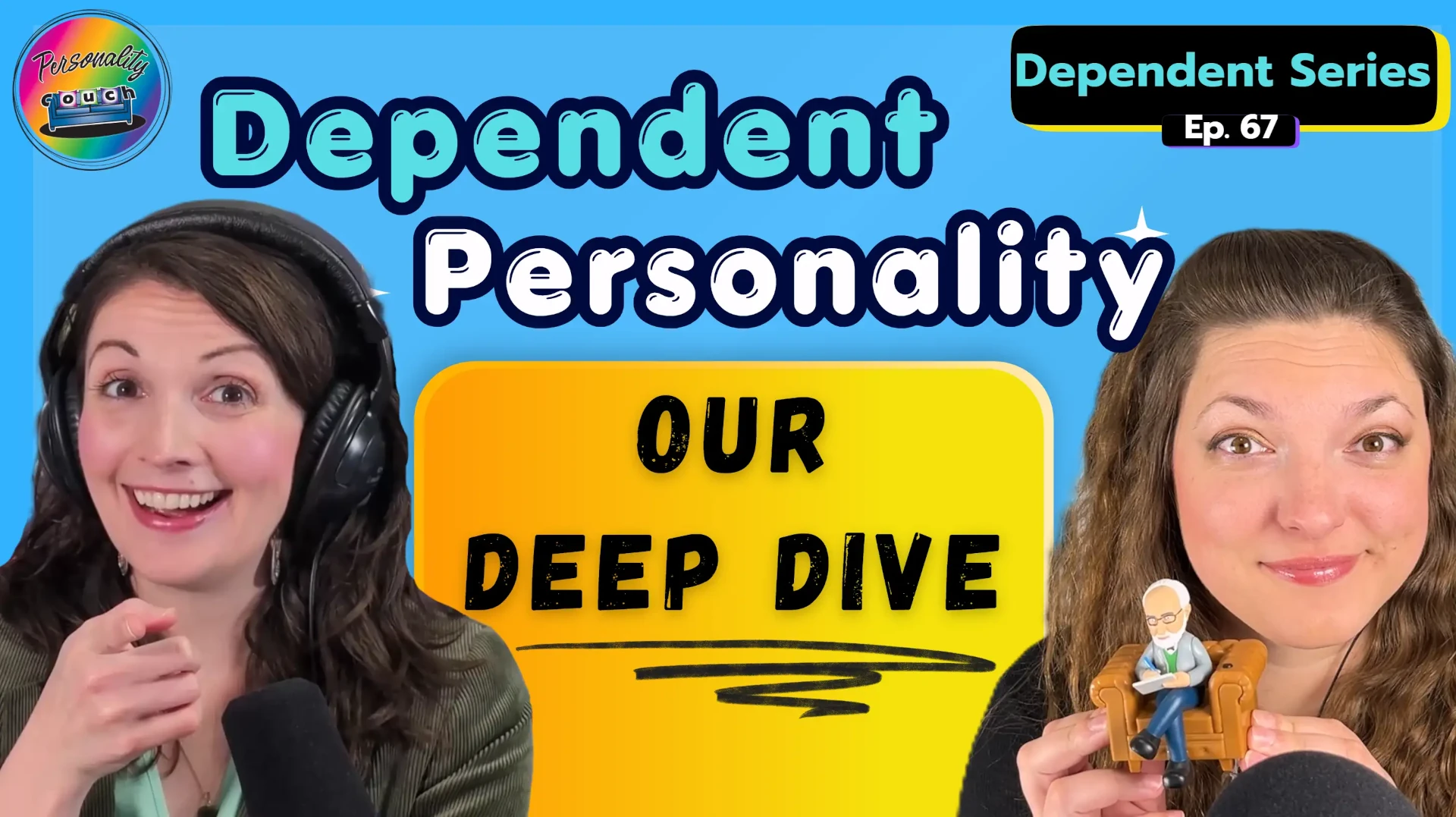
Ep 67: Dependent Personality | Our Deep Dive Psychoanalysis
🎬In this episode of the Personality Couch Podcast, we (licensed clinical psychologists Doc Bok and Doc Fish) explore dependent personality disorder by tracing its historical roots and unpacking psychodynamic and attachment theory. We further discuss the role of gender socialization and cultural attitudes, as well as personalities that don’t look dependent (but are!): the hostile dependent and the counterdependent. We also discuss the overlaps with other personality types, such as the depressive personality and borderline personality disorder. We end by sharing our thoughts and propose putting dependent on a trait continuum versus making it a personality disorder label.
 Doc Bok
 Doc Fish
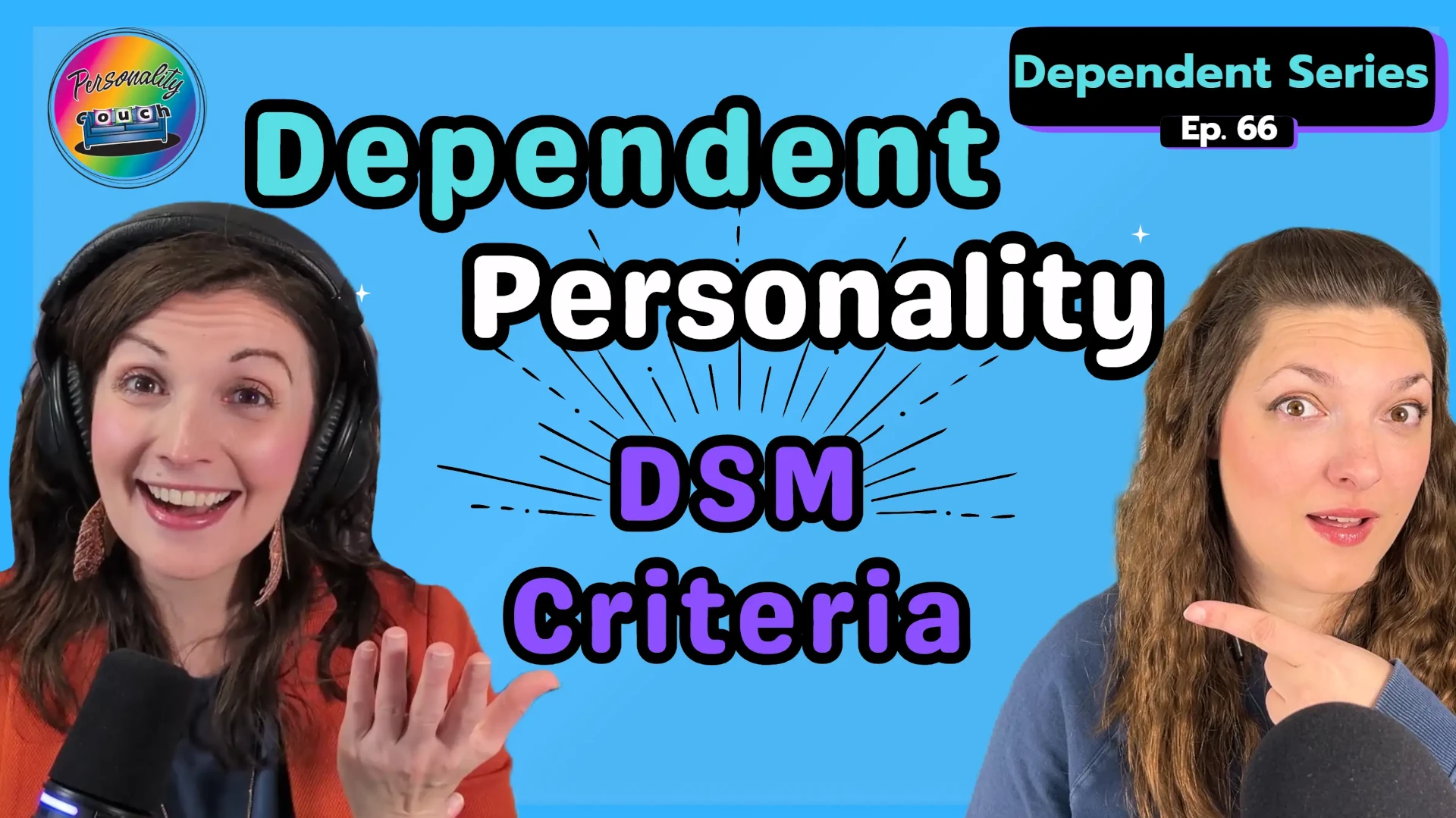
Ep 66: Dependent Personality Disorder | The 8 DSM Criteria
🎬In this episode of the Personality Couch Podcast, we (licensed clinical psychologists Doc Bok and Doc Fish) explore dependent personality disorder, which is characterized by a pervasive and excessive need to be taken care of, resulting in submissiveness and clinging behavior. Individuals with this disorder often fear separation and rely heavily on others for decision-making. We further explore the brief history of this disorder, as well as overdiagnosis in women and in Western societies that value independence above connectedness.
Doc Bok
Doc FishRead Recent Blogs

Dependent Personality Disorder - Outside the DSM
Dependent personality disorder has super interesting roots involving some Freudian stuff we usually think is crazy…but is it? What does the DSM not mention about dependent personality disorder? Let’s find out!
Doc Fish
Dependent Personality Disorder (F60.7) Diagnostic Criteria
When does needing others become a pattern…and a pathological pattern at that? Join me as a go through the DSM-5-TR criteria for dependent personality disorder.
Doc FishContact
Have a suggestion for a topic? Let us know below!
Note: Please do not use this form for clinical information.